Starting a clothing brand often means balancing product quality, cash flow and demand uncertainty. One of the first questions a new founder asks is: how many pieces must I order from a clothing manufacturer?
This is where a low MOQ clothing manufacturer may help.
MOQ means minimum order quantity — the smallest order a manufacturer is prepared to accept under its production model.
What Does Low MOQ Mean in Clothing Manufacturing?
Low MOQ does not have one universal number. A manufacturer may set minimums per style, colour, fabric, size range or production batch. A quote for 100 pieces in one colour is not the same as 100 pieces split across five colours and several designs.
Always ask how the minimum is calculated.
For a small business, the most useful MOQ is one that fits the product plan and the factory’s practical setup. Cutting, fabric purchasing, dyeing, printing, trims and machine setup can all influence the minimum.
A lower quantity may be possible for a simple style using available fabric, while a custom-dyed or highly detailed garment may require a larger commitment.
Why MOQ Matters to a Small Clothing Brand
MOQ plays an important role in the planning and financial management of a new clothing brand.
- Inventory investment: It controls how much cash is tied up in unsold inventory.
- Cost per garment: It affects the unit price because setup and material costs are spread across the order.
- Product variety: It influences how many colours, sizes and designs you can launch at once.
- Market testing: It affects how quickly you can test a new product before scaling it.
Understanding these factors can help new brands make more informed production decisions.
How to Make a First Order More Manageable
Before approaching a manufacturer, prepare your product requirements and think carefully about the first production run.
1. Start with a Focused Range
One or two strong styles are often easier to manage than a large collection with many colours. A focused range can help you control costs and understand customer demand.
2. Use a Clear Tech Pack or Reference Sample
Include all important product details, such as:
- Measurements and size specifications
- Fabric composition and GSM
- Artwork and design references
- Trims, labels and branding requirements
- Stitching and finishing details
Clear specifications help reduce misunderstandings during development and production.
3. Ask How the MOQ Is Calculated
Ask whether the minimum order quantity applies per style, per colour or per fabric. Get the answer in writing before approving the costing.
4. Discuss Available Fabric Options
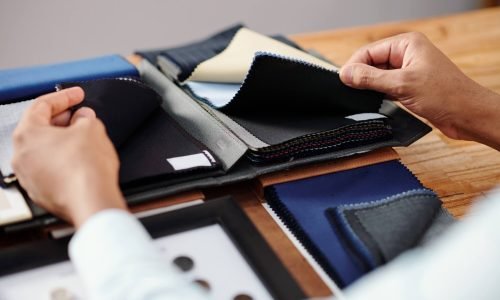
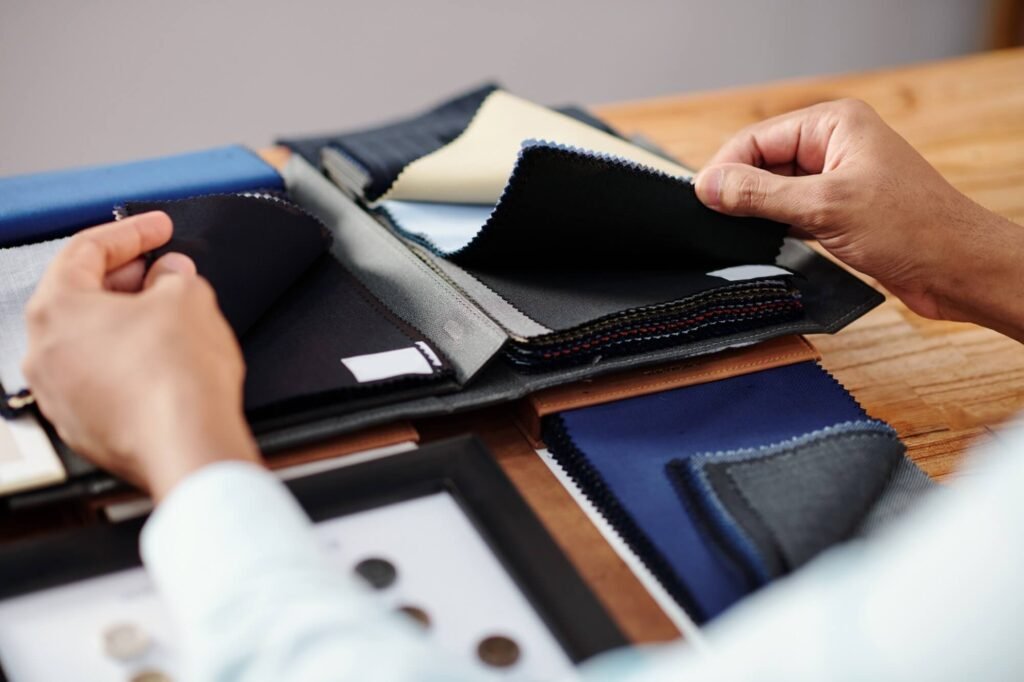
Available fabrics may reduce sourcing complexity compared with a special custom order. Discuss fabric composition, GSM, colour availability and price with your manufacturer.
You can also explore different fabric options for clothing production before finalising your product requirements.
5. Approve a Sample Before Bulk Production
A sample allows you to check fit, construction, fabric, colour and branding against your requirements before committing to bulk production.
Learn more about the stages involved in our garment production process.
What Affects the Minimum Order Quantity?
Several factors influence the MOQ offered by a clothing manufacturer.
- Garment complexity: A basic T-shirt may have different production requirements from a lined jacket.
- Fabric availability: Stock fabrics may offer more flexibility than custom-developed or custom-dyed materials.
- Colour requirements: Multiple colours can increase sourcing and production complexity.
- Printing and embroidery: Artwork, screen preparation and embroidery setup can affect minimum quantities.
- Size range: The number of sizes and how quantities are distributed can influence production planning.
- Trims and packaging: Custom labels, hang tags, buttons and packaging may have their own minimum requirements.
The destination market and required product testing can also affect production planning.
Questions to Ask a Potential Clothing Manufacturer
Before selecting a manufacturer, ask practical questions about its production requirements and pricing.
- Is your MOQ calculated per style, colour or total order?
- Can you quote a trial production run and a repeat-order quantity separately?
- Are there available fabrics that suit my target GSM and price?
- What is included in sampling, labels, packaging and quality checks?
- What changes in price if I increase the order quantity?
Clear answers can help you compare manufacturers and avoid unexpected costs.
How Apparel The Hub Can Support Your Production Planning
Apparel The Hub supports clothing brands with fabric sourcing, garment development, sampling, private-label production and bulk manufacturing in Pakistan.
Minimum quantities and production feasibility depend on the garment style, fabric, colour, customisation and order details. The right starting point is to share your product brief rather than rely on a generic MOQ figure.
Explore our clothing product range, review our fabric options, and learn more about our production process.
When you are ready to discuss your collection, send your production requirements for a quotation.
Frequently Asked Questions
What Is a Good MOQ for a Small Clothing Brand?
There is no single best number. Choose a quantity that fits your budget, expected demand and the manufacturer’s material and production requirements. Confirm whether the MOQ applies per style or colour.
Can I Order 100 Pieces from a Clothing Manufacturer?
Some production arrangements may consider orders around this level, but it depends on the garment, fabric, colour split, customisation and factory schedule. Ask the manufacturer to confirm feasibility against your exact specifications.
Does a Lower MOQ Always Mean a Lower Total Cost?
No. A smaller order may reduce inventory risk but can increase the cost per piece because setup, sourcing and development costs are spread over fewer garments.
Should I Sample Before Placing a Low-MOQ Order?
Yes. A sample helps you assess fit, fabric, construction, colour and branding before you commit to the production quantity.